
Teams that need to turn a leisure idea into an operationally, commercially and spatially coherent format.
Service 02
Business concept development
Definition of the format, experience, activity mix, functional programme, monetisation and operational requirements.
Executive summary
What this service helps decide
When there is a location or thesis, but experience, programme and model are still undefined.
Business concept with activity mix, commercial logic, design criteria and operating requirements.
Define formatPrioritise audiencesStructure monetisationAlign experience and operation
01Diagnosis
02Model
03Plan
04Decision
011. Strategic introduction
Concept development turns a validated opportunity into a concrete business proposition: audience, positioning, experience architecture, activity mix, functional programme, revenue logic and operating requirements.
022. Client profile
Developers, investors, operators and asset owners who need to move from a broad idea to a concept that can be designed, budgeted and executed.
033. When to use it
When the opportunity is promising but the format, audience, activity mix or operating logic are not yet defined.
044. Problems solved
Generic concepts, disconnected activities, weak monetisation, unclear visitor journeys and incomplete design briefs.
055. Scope
Audience definition, positioning, experience architecture, conceptual zoning, functional programme, activity mix, pricing assumptions and technical/operating needs.
066. Methodology
Alternatives are developed from business goals and asset constraints, then compared against capacity, cost, operation, demand and commercial potential.
077. Variables analysed
Audience segments, visit occasions, circulation, zone capacity, dwell time, staffing intensity, main and ancillary revenue, F&B, events and technology needs.
088. Execution phases
Strategic brief, constraints review, audience and positioning, alternatives, business assessment, recommended concept and functional brief.
099. Required documentation
Feasibility study, plans, investment objectives, desired references, technical restrictions and brand criteria.
1010. Deliverables
Concept document, functional programme, zoning, activity matrix, pricing hypothesis and brief for design and development teams.
1111. Decisions enabled
Select a concept, prioritise activities, define investment level, prepare technical design and assess suppliers.
1212. Risks analysed
Low differentiation, low rotation, operating complexity, poor area/capacity fit and mismatch between price, audience and experience.
1313. Collaboration models
Standalone concept, concept linked to feasibility, design accompaniment or review of an existing concept.
1414. Limits and exclusions
It does not replace architecture, engineering, licensing projects or technical design.
1515. Applications by leisure format
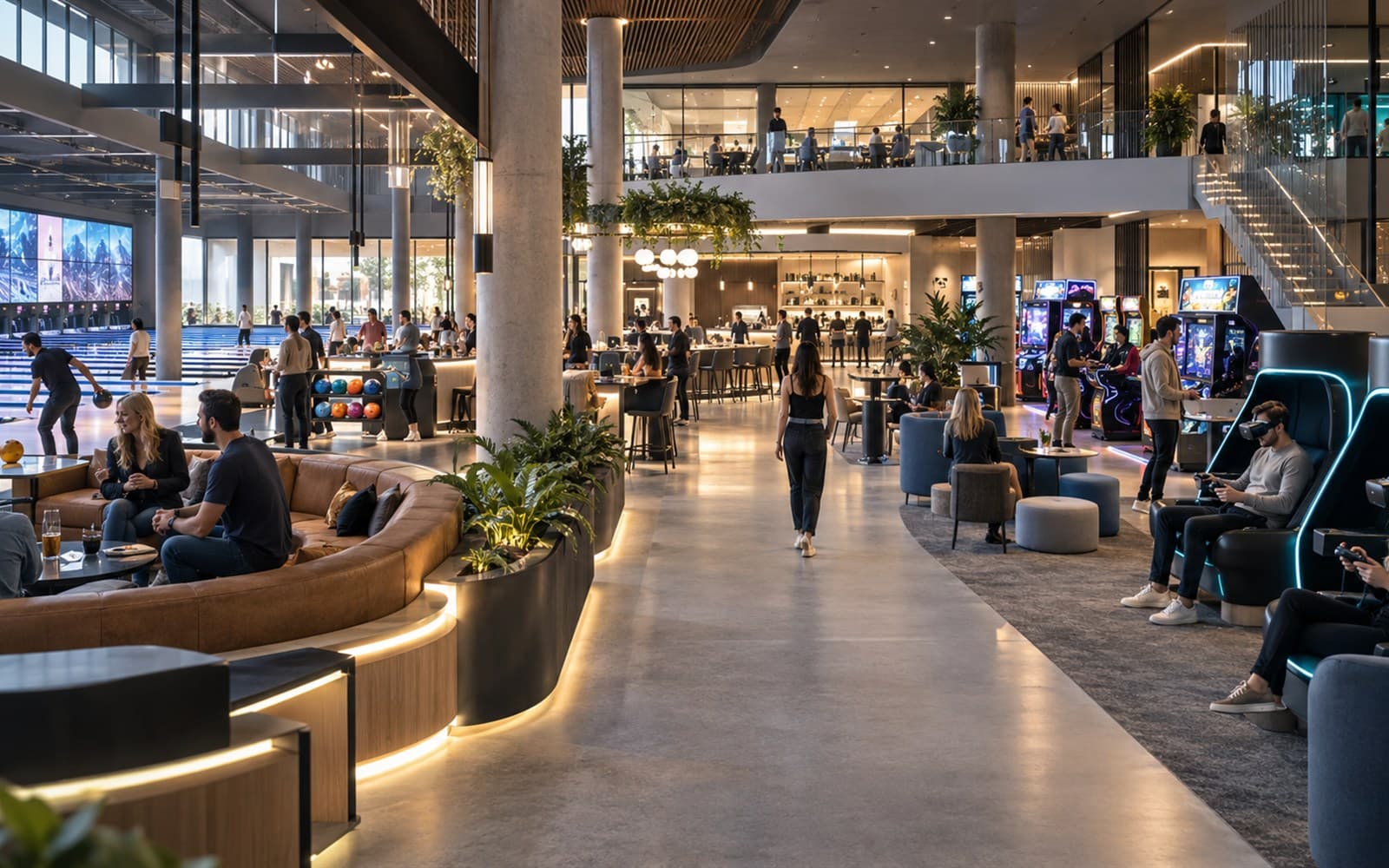
Family centres, social gaming, arcade formats, bowling entertainment, birthdays, events and leisure/F&B hybrids.
1616. FAQs
Does it include branding?
It may define positioning and experience criteria, but full visual identity requires a specific scope.
1717. CTA
Primary: Develop a leisure concept.
Secondary: Present a project.
Next step
Develop a leisure concept
Describe the context and we will prepare a qualified conversation about the opportunity.